STANDD
From pitch deck to conversion-first website - live the morning of their fundraising pitch.
Fintech • Landing page • Branding
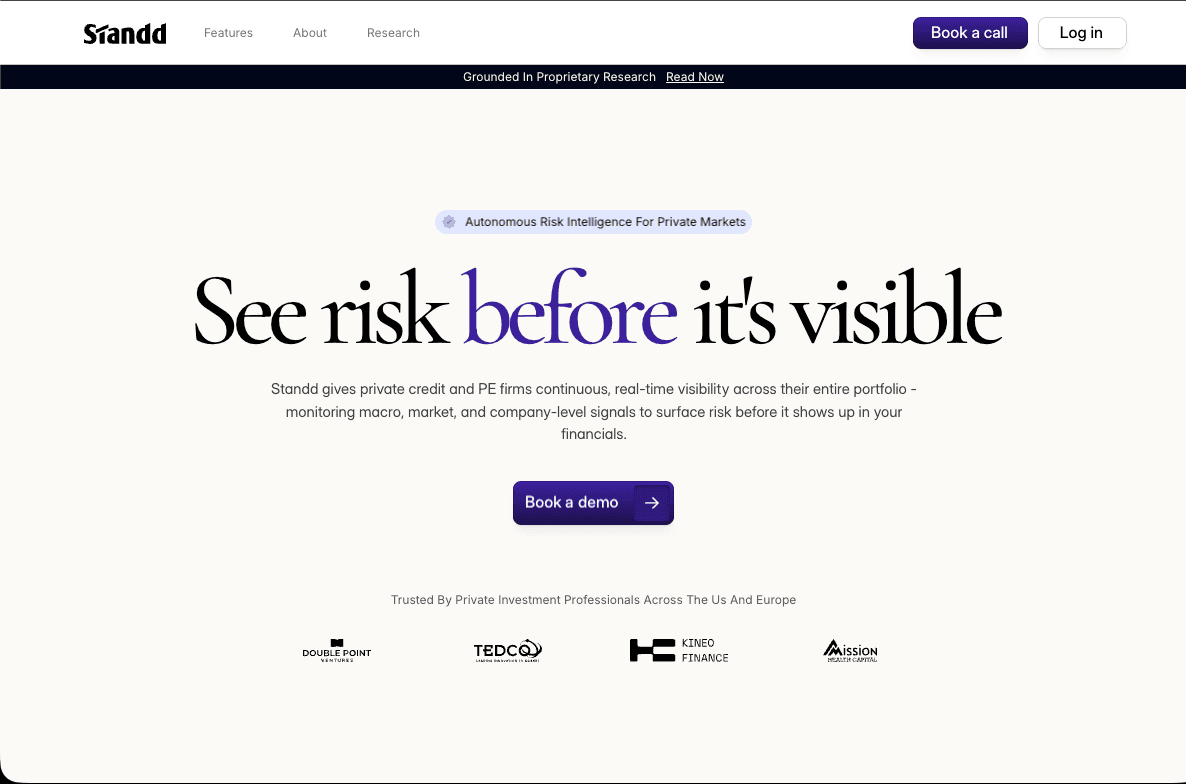

Standd is a portfolio monitoring platform for private credit firms. Using proprietary algorithms, it gives fund managers continuous real-time visibility across their entire portfolio - surfacing risk signals before they show up in the financials. Built for institutional investors who can't afford to be caught off guard.
Results
Branding foundations and live site in 2 weeks
Zero to investor-ready from scratch
Site closed the room on pitch day
THE PROBLEM
Julie came with a clear vision and a tight timeline. Standd is a portfolio monitoring platform for private credit firms - a serious product for a serious audience.
The site they had in mind was structured like their investor deck. Problem-first narrative, stats-heavy sections, a flow that made sense for raising money - not for converting customers.
No visual direction. No copy. No component system. Just a product that needed to look as credible as it actually is.
THE CHALLENGE
A few things made this harder than a typical build.
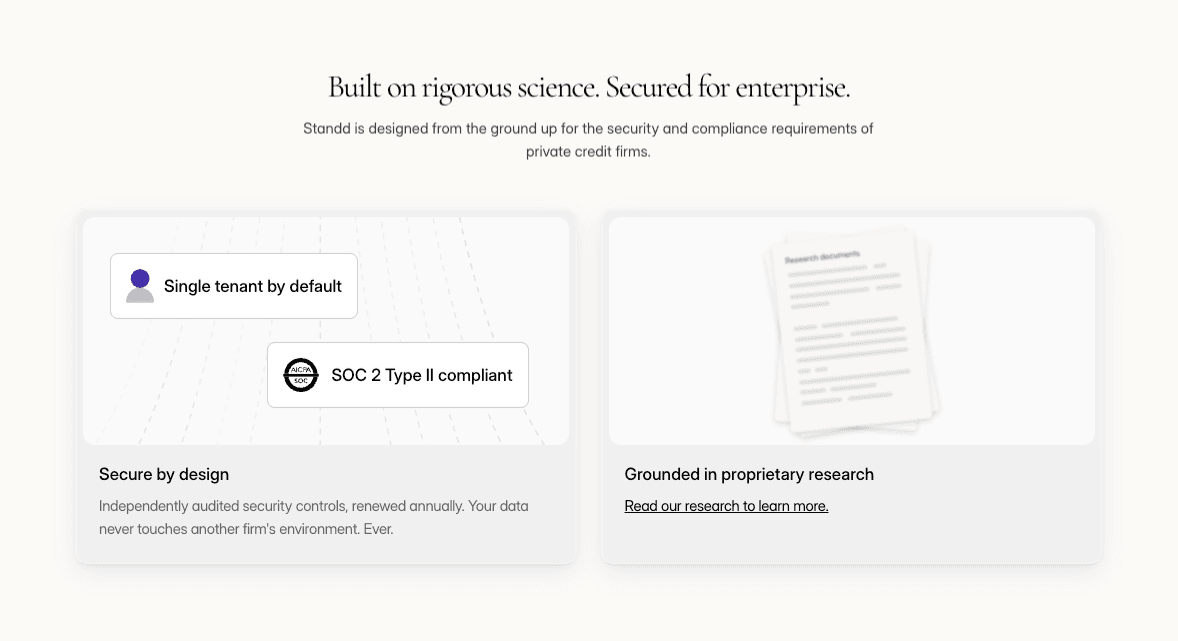
The audience is institutional. Private credit fund managers don't respond to the same visual language as SaaS startups. Everything had to feel precise, trustworthy, and calm - not loud, not clever, not another generic fintech platform.
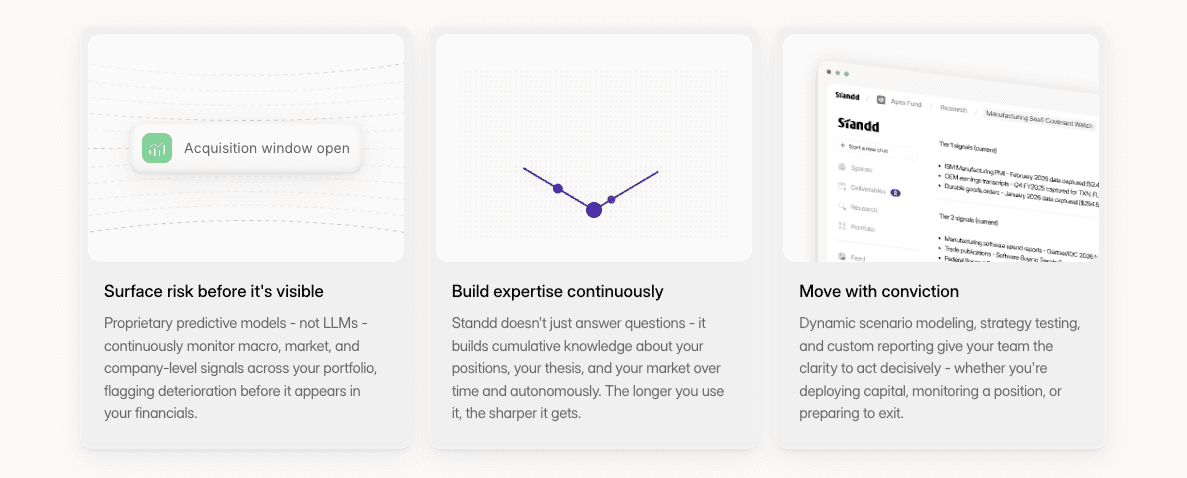
The product is hard to show. Standd's value is in what it catches before anyone else does. But the outputs are signal-based - which on screen can look like any other dashboard. Showing the product without looking generic was a real design problem.
And the timeline was firm. Julie had a pitch. The site needed to be live before it happened.
THE APPROACH
The first decision was visual direction. Cream background, deep navy type, indigo accent. Cormorant Garamond for headlines, Inter for body. The goal was editorial confidence - the kind of aesthetic that makes a fund manager feel like they're looking at something built specifically for them.
The hero went through two full directions. The first used a product UI mockup showing Standd's outputs. It looked like every other fintech platform on the market. We stripped it back to pure typography and let the headline carry the weight instead.
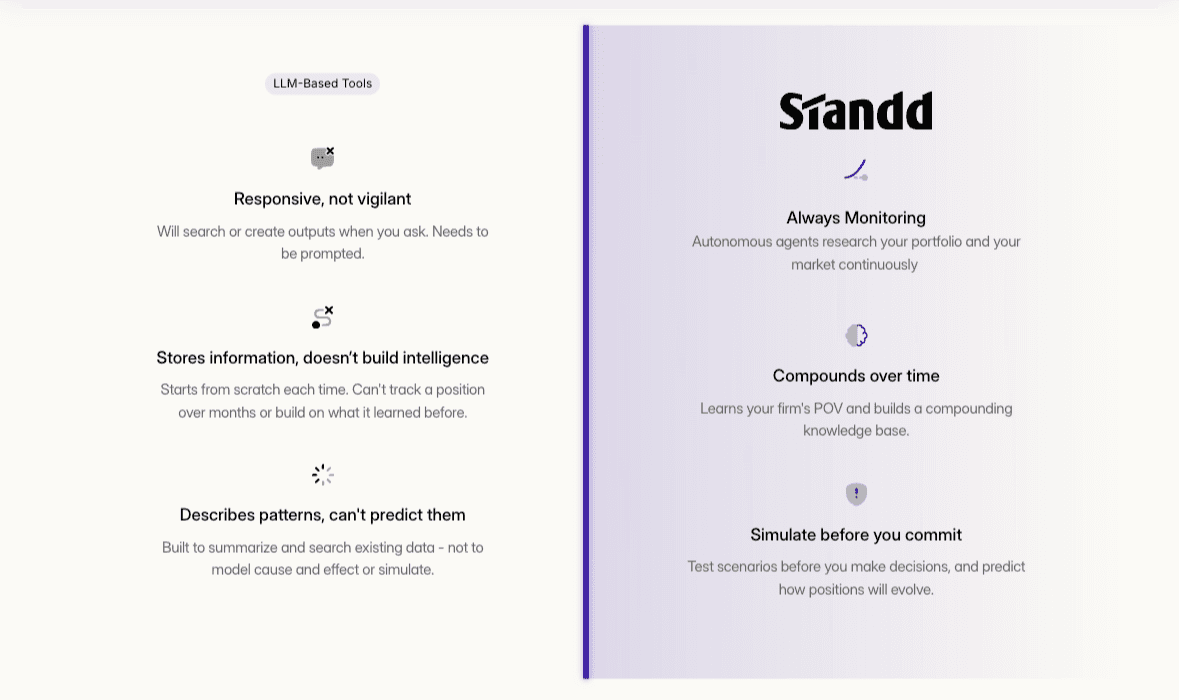
The biggest strategic shift came after Julie flagged that the site read like her pitch deck. She was right. After benchmarking against direct competitors, the pattern was clear - none of them lead with the problem. They lead with value, proof, and product. The entire page flow was rebuilt around that logic.
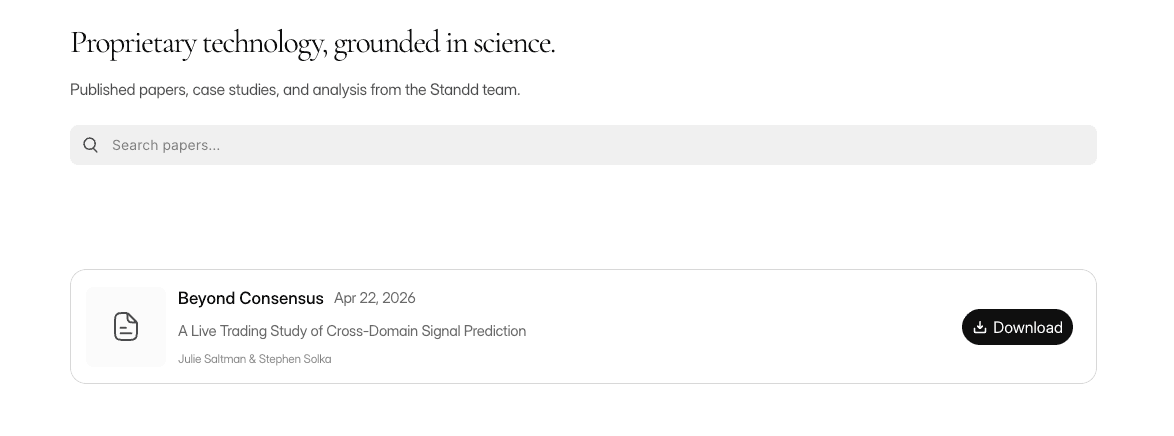
The result
The site went live on standd.io the morning of Julie's pitch. Domain transfer, DNS setup, and publishing were handled directly - Julie didn't have to manage a single technical detail on launch day.
The site performed where it mattered most. Julie's team walked into that room with a product that finally looked as serious as it is.
The engagement also opened the door to a larger conversation around a full rebrand and expanded site post-fundraising - the kind of long-term partnership that starts with getting the first project right.
"I cannot recommend Mac highly enough. He spent the time to really understand our product and company, and created a website that was customized to accomplish our goals. He is very thoughtful and collaborative, and extremely responsive. He went above and beyond to make sure every detail on our site was perfect, and that I knew how to continue to maintain and edit the site on my own. I would definitely work with him again!"